Practical Tips for Storage and Steel Maintenance
The latest developments, technical information, and industry insights regarding the steel sector.

Practical Recommendations for Steel Storage and Maintenance
Although steel products stand out with their durability and long service life, improper storage conditions can negatively affect surface quality and mechanical performance. Especially for products such as steel sheet, galvanized sheet, carbon steel sheet, coil, and pipe–profile, inadequate storage increases the risk of corrosion, surface staining, and deformation.
To maintain production quality and prevent cost losses, steel storage and maintenance processes must be professionally planned.
1. Prevent Moisture and Water Contact
The biggest enemy of steel is moisture. Steel products stored outdoors, in direct contact with the ground, or in enclosed spaces with poor ventilation are at risk of rusting.
Especially:
-
Hot-rolled sheet
-
Carbon steel sheet
-
Slit coil
may show surface oxidation in a short time under humid conditions.
The storage area should be dry, well-ventilated, and preferably humidity-controlled.
2. Avoid Direct Ground Contact
Steel products should not be placed directly on concrete or soil surfaces. Ground moisture can transfer to the steel through capillary action.
-
Wooden blocks
-
Pallets
-
Steel rack systems
should be used to elevate the products from the ground. Even this simple measure significantly reduces the risk of corrosion.
3. Key Points in Coil Storage
When storing coil and galvanized sheet coils:
-
Vertical positioning should be preferred instead of laying them on their side
-
If stacking is required, weight balance must be calculated
-
Protective equipment should be used against edge damage
Improper stacking can cause coil deformation and unwinding problems.
4. Surface Protection in Galvanized and Coated Sheets
White rust formation in galvanized and magnelis sheet products is usually caused by humid environments and lack of air circulation.
To prevent this:
-
Leave air gaps between packages
-
Prevent condensation inside stretch wrapping
-
Perform periodic inspections for long-term storage
Surface scratches in coated products also cause quality loss. Friction should be minimized during handling.
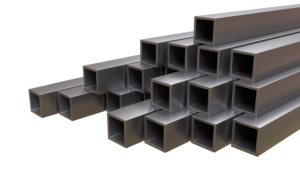
5. Pipe and Profile Storage Arrangement
If pipe and profile products are not stacked properly, bending and deformation may occur.
-
Long products should be supported evenly at multiple points
-
Heavy loads should not be concentrated at a single point
-
If stored outdoors, they should be covered
Support points must be properly planned, especially for large-diameter products such as spiral welded steel pipes.
6. Periodic Inspection for Long-Term Storage
If steel products will remain in stock for months, regular inspections are essential.
-
Surface oxidation checks
-
Packaging condition
-
Humidity level
-
Stacking balance
should be monitored periodically.
Early detection of surface issues prevents serious costs.
7. Care During Handling and Loading
Handling is just as critical as storage. During loading with cranes, forklifts, or hooks:
-
Use protection against edge damage
-
Chains should not directly contact the surface
-
Avoid sudden impacts and friction
This is especially critical for products where surface quality is important, such as cold-rolled sheet and electro-galvanized sheet.
Conclusion
Steel products are durable, but improper storage conditions can quickly reduce the value of even the highest-quality materials. Proper storage of steel sheet, galvanized sheet, carbon steel sheet, coil, and pipe–profile products directly affects production quality, surface performance, and cost control.
It should not be forgotten that storage is not just an operational detail but a part of quality management. Proper stock management and maintenance discipline are fundamental elements of sustainable success in the steel industry.